Wednesday, August 5, 2015

I'd rather ...

Decadence?

dec·a·dence
/ˈdekədəns/noun
  • luxurious self-indulgence.
  • moral or cultural decline as characterized by excessive indulgence in pleasure or luxury.
e.g., "he denounced the decadence of the elite"
synonyms: dissipation, degeneracy, corruption, moral decay, immorality
The word decadence, which at first meant simply "decline" in an abstract sense, is now most often used to refer to a perceived decay in standards, morals, dignity, religious faith, or skill in governance, most seen among members of the elite.

The greatest risk faced by a successful civilization is perhaps visible when great progress turns inward to luxury, purposeless wealth, and a self-centrality that is blind to the world of others.  ... with ten or a hundred times more than enough, they don't even notice that they're blind.  They say they can see clearly.

On a storytelling day, he talked about sorting two kinds of people like a shepherd sorting out sheep and goats, these to the right and the others to the left. (I doubt he had anything against either one; it was probably just an easy visual for his hearers.)  

To the people on the right, he commended them for their good hearted service and welcomed them into his home, but they were dumfounded.  "When ever did we serve so well as to be rewarded like this?"  "When you served the least among you, it's me you've served," was the answer, or words to that effect.

To those on the left, he commanded them to leave, reminding them that they had served only themselves and had habitually neglected the needs of others, they had turned a blind eye. Something like that, anyway.  The poor and hungry, the sick and those in prison, the widows and orphans, all pretty much ignored, I suppose, while the goats just ate and got fat.  Decadence.

Favorite friends -- five kids in the family; dad lost his arm in an accident.
After recovering, stateside friend of mine sponsored them for a couple 
of years.  Roberta (NGO Coordinator) coached them through rebuilding 
their house, adding floors and bed pads, getting the kids back in school.  
They took off from there; ran pipes for a water spigot in their front yard, 
bought some breeding pigs and ducks, and they cultivate a 500x500 foot 
garden that adds a lot to their survival.  Last time I visited, they were 
bursting with pride at the progress they'd made.  They have electricity 
now, too.  They did all the hard work themselves with just a little help.
for materials and stuff.
2016 Update: after four years, dad is working again, and the family has
some regular income; mom and the kids tend the home business; things 
are going pretty well.


For a look at the difference one might make, remember there were many who helped slaves flee to the North, and there were many who hid Jews and fed them during the war years.  Today there are many who help those trapped in poverty, deprived in a world that's rich and blind.  

Did you know that you can put a kid through regular school and then trade school for the price of a nice television?  You can sponsor a family's progress building a home, planting crops, and putting their kids through school for less than it takes to insure your car.  Change makers and help bringers are among us; be one of them.

Would you rather live in luxury or in making a difference in the lives of others?   Easy choice.  :)
Tuesday, August 4, 2015

The Tested

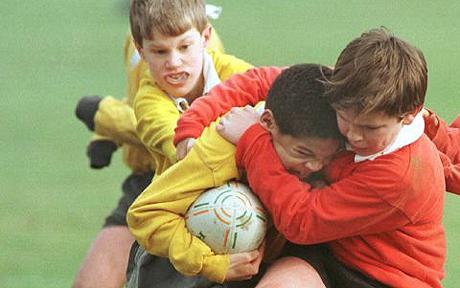
A furiously competitive soul lives in some of us but perhaps not in all.

For the competitors, a challenge must be faced perhaps as a test of worth, of fortitude; the challenge is there to confront and overcome. A competitor will have goals like 'winning' and 'coming out ahead'.

There are good and not good results of competition.  Cooperation, perseverance, courage, and camaraderie; those are all good. Self-esteem based on superiority, losers as less worthy, humiliation, arrogance, and hubris; each is destructive to character in the competitor and will affect their life to the end.

Challenges for the individual span both physical and intellectual tasks.  Even test taking.

IQ scores vary by motivation as much as by education.  Some folks care less what the results of a test might be or what others might think of the results.  Others care more.

Often in the social and political world, the challenge is to outmaneuver your opponent, to persuade or manipulate, to forcefully justify for the sake of the win.

Understanding this about the competitive nature is essential when it comes to our goals. Competing to win is natural, but it can be counter-productive.

The position-seekers compete with the solution-seekers
The conservatives compete with the liberals.
The same-ers compete with the change-ers.
The result is polarization and impediment to improvement.

The rich compete with the non-rich.
The result is inequality, oppression, and deprivation.

The 'natural' process of the biosphere is competition for resources and survival.  We hope for better in ourselves.  We hope that the human realm might display a measure of nobility, of understanding, and of common good for all.  There's room for gentleness, objectivity, openness, and compassion, is there not?

Meaningful life is not a competition, but it is a noble goal.  Competition will not take us there.

Competition -- do my goals (and actions) include the good of others, or is staying on top enough in itself?  Do the kids understand?

Update 15AUG; Donald Trump, "We will always come out on top."  That's his forecast for international relations if he is elected president.  It's not a new plan.


Sunday, August 2, 2015

fighting in front of the children ... ?


You should probably fight in front of your kids, at least I think so. 

Fighting in front of the kids can be instructive or destructive, depending.

My generation never saw mom and dad fight.  We might have heard them sometimes, but they were behind closed doors. That was their generation's rule; don't fight in front of the kids.

We went the other way when our kid was growing up, and we did it deliberately.  We figured she'd not know how to argue reasonably unless we showed her how, so that's what we decided.

Interestingly, having her there in the room when contentious issues came up was a great throttle on our verbal and emotional content. We were trying to let her see how grown people could have different ideas and priorities and work them out, and having her within earshot was a continual reminder to get it right.

No escalation, no raised voices, no threats or insults, no outbursts of anger.  Mostly, it was reasonable negotiation of what's important to you and to me and to us.  So, she did us a favor as the unknowing referee.  Years later, she complimented us on how well we'd done demonstrating that stuff for her and how she now does the same with her husband.

If she only knew.  :)


FYI: Kids routinely exposed to high-intensity conflict between their parents can suffer brain injury similar to PTSD. As long as the arguing is constructive and respectful, however, kids can learn a lot about relationships and conflict resolution from watching parents sort out issues. 


Saturday, August 1, 2015

A small part of the truth

Well said. ~ Humans of New York - Pakistan


From the far side of the world: 
"There's only so much space in the newspapers and there's so much news in the world.  Only the most jarring stories make the cut."
She's right, of course.
The media provides little insight into the real world, something worth remembering before we get spun up about the latest headlines.

We have the resources to do our own inquiry and research, see all sides, and perhaps understand. Tedious as that may be, it is probably better than being a sheep.

Friday, July 31, 2015

Solutions?


Everyone wants to do well.
Everyone wants to have a place in the family, in the community.
Everyone wants to belong, to fit in and be part of the good things.

But what if our culture is imperfect.
What if the way we have organized things favors the wealthy and makes it harder for regular folks.

What if at the bottom of the wealth ladder, you could just fall off, with no escape.

Are there things we as a nation and culture might do differently?
How about our own life choices?

  • Of the culture norms, do we know which are good and which are destructive?
  • Have we chosen accordingly?


  • What's our plan to be different and make a difference?

Thursday, July 30, 2015

Pro-life? Perhaps.


The defense of 'life' by pro-life advocates is only one of many appropriate concerns regarding our country's commitment to its' citizens.  It's perhaps the first in ethical importance, but there are more.  Here's a quick list:

food - 
housing - 
education - 
opportunity - 
employment - 
healthcare - 
freedom - 
equality - 
security - 
safety - 


A February review by the National Poverty Center of poverty data since 1996
estimates that the number of households in extreme poverty - people living
on $2 or less daily,  - rose from 636,000 households in 1996 to 1.46 million
 households in 2011, including 2.55 million children.
 an increase of 130 percent.
"I do not believe that just because you're opposed to abortion, that that makes you pro-life. In fact, I think in many cases, your morality is deeply lacking if all you want is a child born but not a child fed, not a child educated, not a child housed. And why would I think that you don't?  Because you don't want any tax money to go there. That's not pro-life. That's pro-birth.  We need a much broader conversation on what the morality of pro-life is."
  ~Sister Joan Chittister, O.S.B.


Republicans and Democrats each claim the moral  high ground.  Any chance they both need some severe correction? 
Our polarized rhetoric and our similarly polarized Congress are doing extraordinary harm to our nation and its' citizens.  It's as though the goal is winning rather than serving well.


Note:  Sister Joan is the author of 50 books and a lecturer. Holding a Ph.D. from Penn State University, she is also a research associate at Cambridge University. Other subjects of her writing includes women in the church and society, human rights, peace and justice, religious life and spirituality. She has appeared in the media on numerous shows including Meet the Press, 60 Minutes, Bill Moyers, BBC, NPR, and Oprah Winfrey. You can visit Joan Chittister's website at Joan Chittister.org.  Interesting lady.